Silicone Grip Flip Tongs-Spatula: Easy, Clean Turns
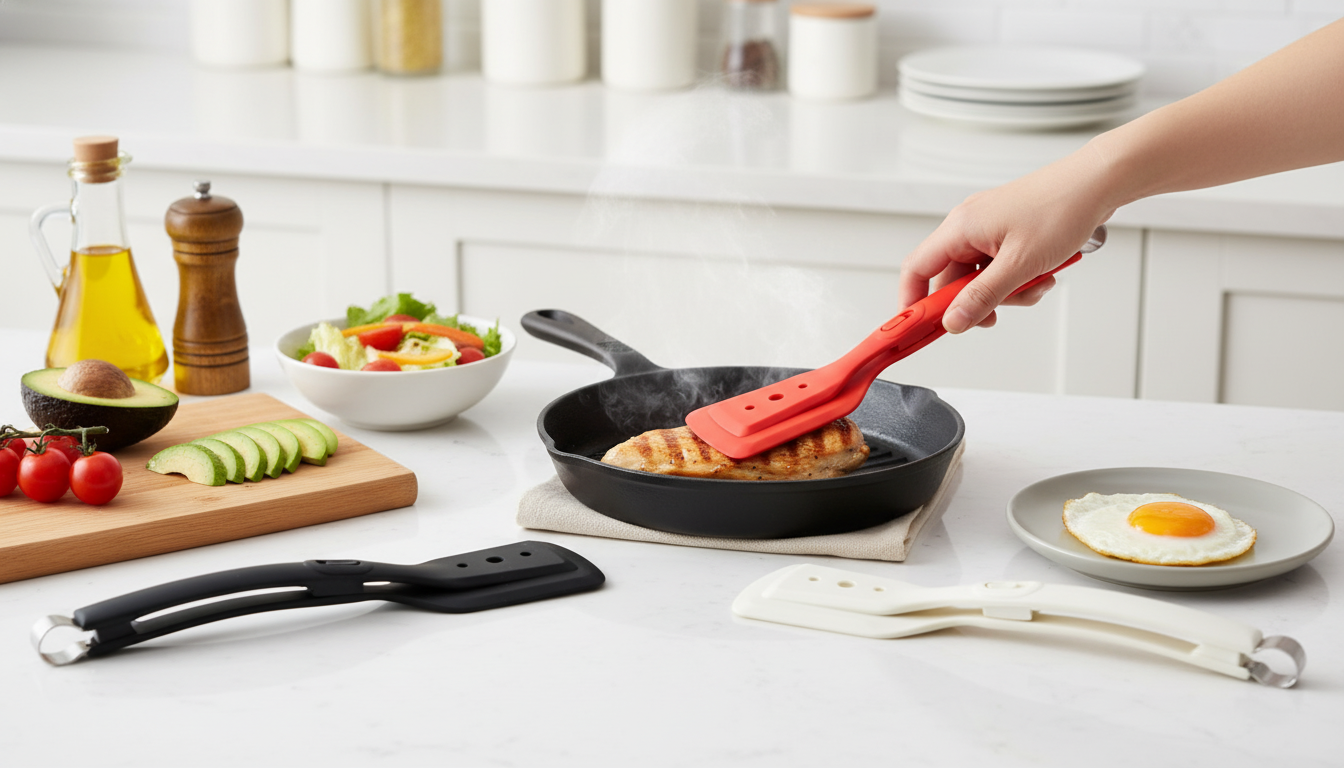
2-in-1 Silicone Grip Flip Tongs & Spatula for Cooking & Grilling
A tool that flips like a spatula and grips like tongs can make everyday cooking and backyard grilling smoother—especially when foods are delicate, slippery, or heavy. This 2-in-1 silicone grip flip tongs & spatula is designed to help lift, turn, and serve with better control while being gentle on cookware surfaces. From burgers and fish fillets to roasted vegetables and pancakes, the combination shape aims to reduce fumbling at the moment that matters most: the flip.
What the 2-in-1 design changes in the kitchen and at the grill
The biggest advantage of a tong-spatula hybrid is reducing the “two-tool shuffle.” Instead of grabbing a spatula to lift and then switching to tongs to steady, the combined shape helps you do both at once. The spatula side slides underneath to support the food’s full weight, while the tong side lightly holds from above to keep it from sliding off during the turn.
- Combines two common moves—gripping and flipping—into one motion to reduce utensil swapping.
- Helps support food from underneath (spatula side) while lightly holding from above (tong side) for stability.
- Useful for foods that break easily: fish, tofu, veggie patties, omelets, and stuffed sandwiches.
- Improves control when transferring items from a hot grate or pan to a plate without sliding.
- Cuts down on clutter at the cook station—handy for small kitchens, campers, and grill carts.
Where it performs best
This style of utensil shines in situations where food can bend, flake, or slip—especially during the transfer from heat to plate. Because it supports from below and stabilizes from above, it can help prevent torn edges and mid-air drops.
- Grilling: turning burgers, sausages, kebabs, and vegetables while keeping a steady grip.
- Stovetop: flipping pancakes, eggs, quesadillas, and searing proteins without tearing.
- Oven trays: lifting roasted vegetables, baked chicken pieces, or sheet-pan meals with less chasing around the pan.
- Serving: moving portions cleanly from pan to plate with fewer drips and fewer broken pieces.
- Meal prep: handling multiple items quickly when cooking in batches.
Material and cookware friendliness
Silicone contact surfaces are typically gentler than metal on nonstick and coated cookware. That matters for everyday pans and griddles where a rigid edge can scrape or leave marks over time. The grip-and-lift action can also reduce the urge to “dig” under food compared with a stiff spatula alone.
For high-heat grilling, it’s still smart to treat any silicone tool with a bit of caution: avoid leaving it resting directly over open flame or parked on the hottest edge of the grate for long periods. Many silicone utensils are made for cooking temperatures, but heat resistance varies by product, so check the manufacturer’s rating and use common sense around direct flame.
If the tool has a metal core under the silicone, it can offer better support for heavier foods (like thick burgers or large fillets) while still being surface-safe.
Quick specs and at-a-glance benefits
- A combined tong-spatula shape is built for stability during flips and transfers.
- Silicone contact points help with grip and can be easier on delicate foods.
- Ideal for both indoor cooking and outdoor grilling setups.
At-a-Glance Comparison: Common Utensil Tasks
| Task | Typical Spatula | Typical Tongs | 2-in-1 Grip Flip Tongs & Spatula |
|---|---|---|---|
| Flip fish fillet | Good support, can slide off | Good grip, can pinch/tear | Supports underneath while stabilizing on top |
| Turn burgers | Works, may need a second tool to steady | Works, can lose support underneath | Steadier lift-and-turn in one motion |
| Move roasted vegetables | Scoops well, can spill | Grips well, can drop small pieces | Scoop + light clamp reduces spills |
| Serve from pan to plate | Clean slide, less hold | Firm hold, less lift support | More controlled transfer |
How to use it for clean flips (without crushing food)
The trick is to let the spatula side do the heavy lifting while the tong side provides just enough “insurance” to keep the food stable. Think steady, not squeeze.
For meat and poultry, safe doneness matters as much as a clean flip. Use a thermometer and follow the USDA’s recommended minimum internal temperatures when grilling or pan-searing: USDA Food Safety and Inspection Service — Safe Minimum Internal Temperature Chart.
Cleaning, storage, and longevity tips
For general information on materials used in food-contact applications, see: U.S. Food & Drug Administration — Food Contact Substances.
Who it’s a smart fit for
Shop in-stock picks
- 2-in-1 Silicone Grip Flip Tongs & Spatula for Cooking & Grilling
- 3D Wooden Steam Locomotive Puzzle Kit – Mechanical Model for Adults & Teens
- Ultralight Baitcasting Reel 160g
FAQ
Is silicone safe to use with hot pans and grills?
Many food-grade silicone utensils are designed to handle typical cooking temperatures, but heat resistance varies by product. Check the product’s stated heat rating, and avoid resting silicone tools directly over open flame or on the hottest grill grate for extended periods.
Will it scratch nonstick cookware?
Silicone is generally gentler on nonstick and coated surfaces than metal tools. To keep cookware and the utensil in good shape, avoid abrasive scrubbers and don’t use the edge to aggressively scrape burned-on residue.
What foods are easiest to flip with a tong-spatula combo?
Burgers, fish fillets, chicken pieces, pancakes, omelets, quesadillas, and roasted vegetables are all good candidates. The key benefit is support underneath while the top side stabilizes the food during the turn and transfer.









Leave a comment