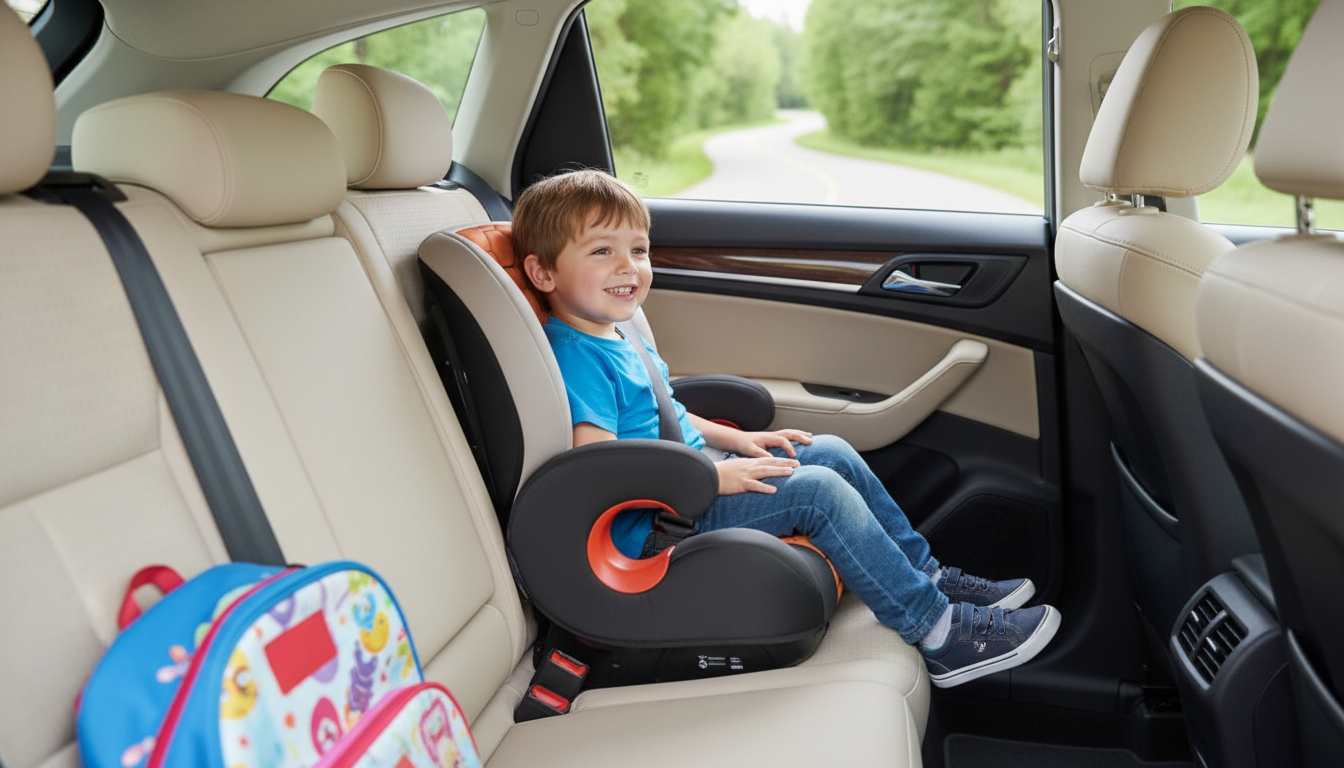
A booster seat helps a child fit a vehicle seat belt the way it was designed to work—across the strong bones of the shoulder and hips, not the neck or stomach. Choosing the right booster and using it correctly can make daily rides safer and more comfortable, especially as children grow out of a harnessed car seat but are not yet ready for an adult belt alone.
A booster seat is a positioning tool. It raises and supports a child so the vehicle’s lap-and-shoulder belt contacts the body in the right places.
For broader guidance on stages of child restraint use, review resources from NHTSA and the American Academy of Pediatrics.
Readiness is about size and behavior. A booster only works if the child can stay properly positioned every minute of the trip—whether it’s a quick school run or a longer drive.
| Check | What to look for |
|---|---|
| Harness outgrown | Child exceeds the harnessed seat’s height/weight limits or shoulders are above top harness slots (per seat manual) |
| Sitting posture | Stays seated upright without slumping or leaning for the entire ride |
| Belt tolerance | Keeps shoulder belt on the shoulder (not under arm/behind back) |
| Head support | Vehicle seatback/head restraint provides adequate head support |
Both styles can work well when the belt fits correctly and the child stays positioned. The deciding factors are usually your vehicle’s seat shape and head restraint setup, plus how much guidance your child needs to keep the shoulder belt in place.
| Type | Best for | Potential drawbacks | Vehicle considerations |
|---|---|---|---|
| High-back booster | Needing extra shoulder-belt guidance; vehicles with low seatbacks | Bulkier; can be harder to move between cars | Helpful when head restraint/seatback support is limited |
| Backless booster | Easy portability; older kids who sit properly | Less guidance for shoulder belt depending on vehicle | Requires adequate head restraint/seatback support |
| Item | Pass criteria |
|---|---|
| Lap belt placement | Low and snug on hips/upper thighs; not over the belly |
| Shoulder belt placement | Centered on shoulder and chest; not cutting into the neck |
| Booster stability | Sits flat with minimal rocking on the vehicle seat |
| Head support | Child’s head supported by vehicle seat/head restraint or booster back (as allowed) |
| Daily usability | Child can buckle and stay positioned correctly without reminders |
| Problem | Why it matters | What to do |
|---|---|---|
| Shoulder belt touches neck | Encourages kids to move belt out of position | Try a high-back booster with better belt guides; adjust head restraint and seating position |
| Lap belt rides up on belly | Increases risk of abdominal injury | Verify routing under guides/armrests; reassess booster fit in that vehicle |
| Child slouches or leans | Belt no longer rests on strong bones | Use a booster that supports posture; take breaks on long drives; delay booster use if behavior isn’t ready |
For additional research and compatibility notes, see the IIHS child safety guidance.
Generally no. Most boosters are designed to work with a lap-and-shoulder belt so the upper body is properly restrained; a lap-only belt can leave the torso unprotected and increase injury risk. Check both your booster manual and the seating position in your vehicle to confirm the belt type allowed.
Safety depends on belt fit and correct use, not the label. A high-back booster can help with shoulder-belt positioning and head support in some vehicles, while a backless booster can work well when the vehicle provides proper head restraint and good belt geometry.
Try a different booster that offers better shoulder-belt guidance, and confirm the belt is routed through the correct guide for that model. Adjust the vehicle head restraint and make sure the child sits upright without leaning; avoid add-on belt adjusters unless the booster manufacturer specifically approves them.


Leave a comment