Portable Suitcase Record Player with Built-In Speakers (3-Speed Vinyl Turntable)
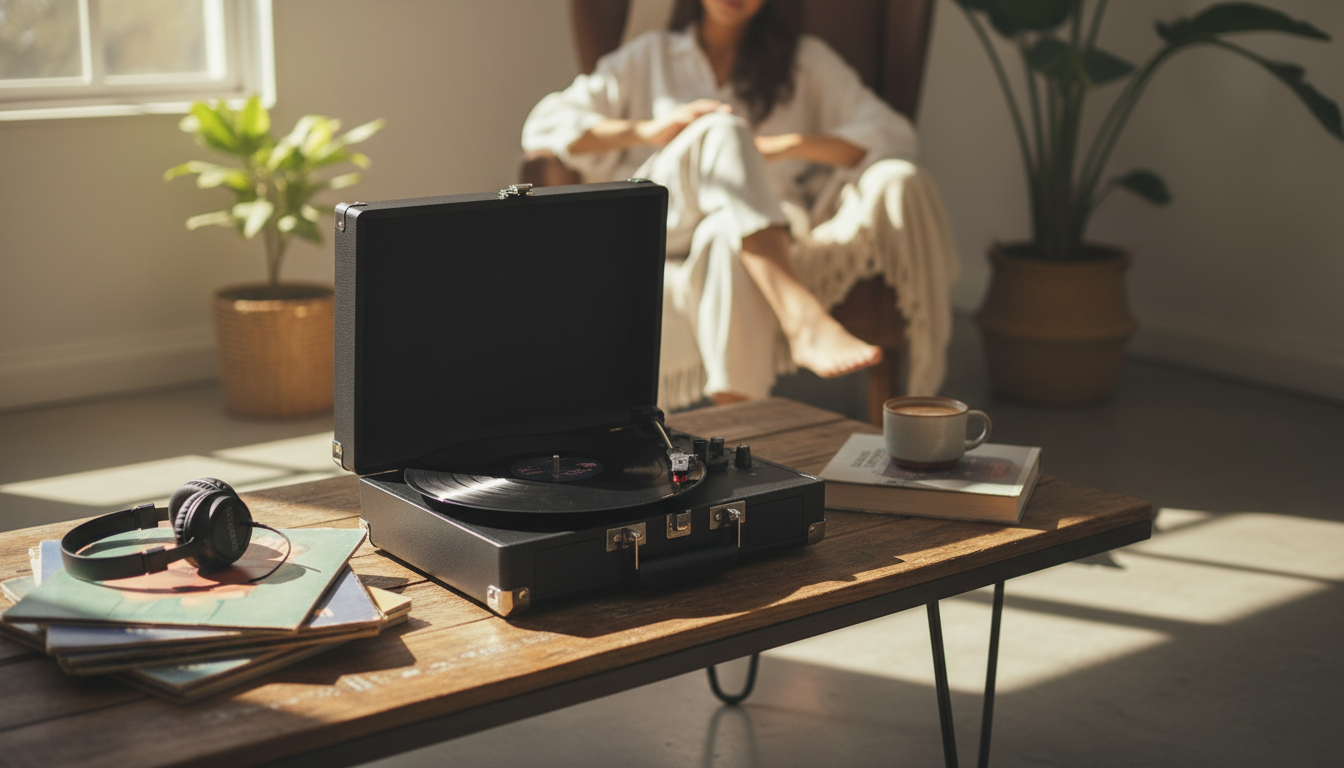
A suitcase-style turntable brings vinyl playback back to basics: lift the latch, place a record, and press play—no separate amplifier or speaker setup required. With 3-speed support (typically 33⅓, 45, and 78 RPM) and built-in speakers, these portable record players fit naturally in dorm rooms, bedrooms, home offices, and small apartments. Below is what they’re best for, what features matter most, how to set one up for smoother playback, and how to pick a model that matches your collection and listening habits.
What This Suitcase Turntable Is Best For
- Casual listening with built-in speakers for quick setup without extra gear
- Small spaces like bedrooms, dorms, offices, and apartments
- Occasional travel or moving between rooms thanks to the suitcase form factor
- Spinning a mix of record sizes when 3-speed support is included (typically 33⅓, 45, 78 RPM)
- A budget-friendly entry point into vinyl playback
If the goal is easy background music, a compact all-in-one unit is hard to beat. For high-volume listening or deep bass, pairing a player’s line-out with powered speakers (when available) is usually the bigger leap in sound quality than switching suitcase models.
Core Features to Look For in a 3-Speed Portable Player
- Speed selector: Confirm support for 33⅓ and 45 RPM (and 78 RPM if older shellac records are part of the collection).
- Built-in speakers: Convenient for immediate playback; check for left/right speaker placement and enough volume for a small room.
- Cartridge/stylus type: A replaceable stylus matters for long-term use and easier maintenance.
- Auto-stop or tonearm return: Helpful for reducing needle wear when a side ends (if included).
- Output options: A headphone jack and line-out/RCA make it easier to upgrade to external speakers later.
- Power source: AC power is most common; some models add battery options for extra portability.
When comparing models in the same price range, prioritize the basics that protect records: consistent speed, a tonearm that tracks reliably, and easy-to-find replacement needles.
Built-In Speakers: What to Expect From the Sound
- Built-in speakers are designed for convenience, not maximum detail—expect a friendly, room-filling sound at close range.
- Bass is typically limited due to small speaker drivers and compact enclosures; placing the player on a solid surface can improve perceived low end.
- Vibration control matters: avoid placing the player on the same surface as heavy foot traffic to reduce skipping.
- For cleaner sound and higher volume, use a line-out (if available) to powered speakers; keep the suitcase player’s volume at a moderate level to reduce distortion.
A helpful rule of thumb: if vocals start sounding strained or “fuzzy,” back the volume down slightly. Small built-in speakers can distort quickly at their upper limits, especially on bass-heavy tracks.
Speed Settings and Record Compatibility
- 33⅓ RPM: Most full-length LP albums
- 45 RPM: Many singles and some specialty pressings
- 78 RPM: Older records; confirm stylus compatibility because some 78s require a dedicated stylus for best results
- Use the correct speed to avoid pitch and timing issues; if voices sound too slow or too fast, re-check the selector before troubleshooting anything else
Speed Guide: Which Setting to Use
| Speed |
Common Record Type |
Typical Size |
Notes |
| 33⅓ RPM |
LP albums |
12-inch |
Most modern albums and reissues |
| 45 RPM |
Singles/EPs |
7-inch |
Often needs an adapter for large-center-hole singles |
| 78 RPM |
Vintage records |
10-inch/12-inch |
May require a compatible stylus; handle carefully |
Setup Checklist for Smooth Playback
- Pick a stable surface: Place the player on a flat, sturdy table or shelf away from speakers with strong bass (to minimize feedback).
- Keep it level: Uneven placement can affect tracking and increase skipping; if the surface wobbles, move to another spot.
- Clean before you play: Lightly brush the record with a carbon fiber brush or microfiber cloth to remove dust.
- Start at moderate volume: Raise gradually to reduce distortion from compact speakers.
- Lid position: Close the lid while playing only if the design supports it without touching the record or tonearm.
For records that have been stored for years, a deeper clean can dramatically reduce pops and crackle. Basic preservation guidance from the Library of Congress is a solid reference for handling and storage habits that keep grooves in better condition.
How to Choose the Right Suitcase Record Player
If you’re new to turntables, it can also help to review manufacturer setup and care notes. Audio-Technica’s turntable support resources are a useful benchmark for basics like stylus care and connection types, even if you’re using a different brand.
Care, Cleaning, and Record Protection
Quick Troubleshooting
FAQ
Can built-in speakers sound good for everyday listening?
Yes—built-in speakers can be enjoyable for casual listening in smaller rooms, especially at moderate volume. The main limitations are lower bass output and reduced clarity at high volume, and a line-out to powered speakers (if available) typically improves loudness and detail.
Do 78 RPM records require a special needle?
Often, yes. Many 78s play best with a stylus designed for 78 RPM grooves, and using the wrong stylus can increase surface noise and speed up record wear.
Why does my record sound too fast or too slow?
The most common cause is the wrong speed setting. Double-check the selector (33⅓ vs 45 vs 78) and confirm the record type before assuming there’s a mechanical problem.
Recommended for you




Leave a comment