Cat Tree Tower with Hammock, Perch, and Hanging Balls: Comfort, Climbing, and Scratch-Friendly Fun
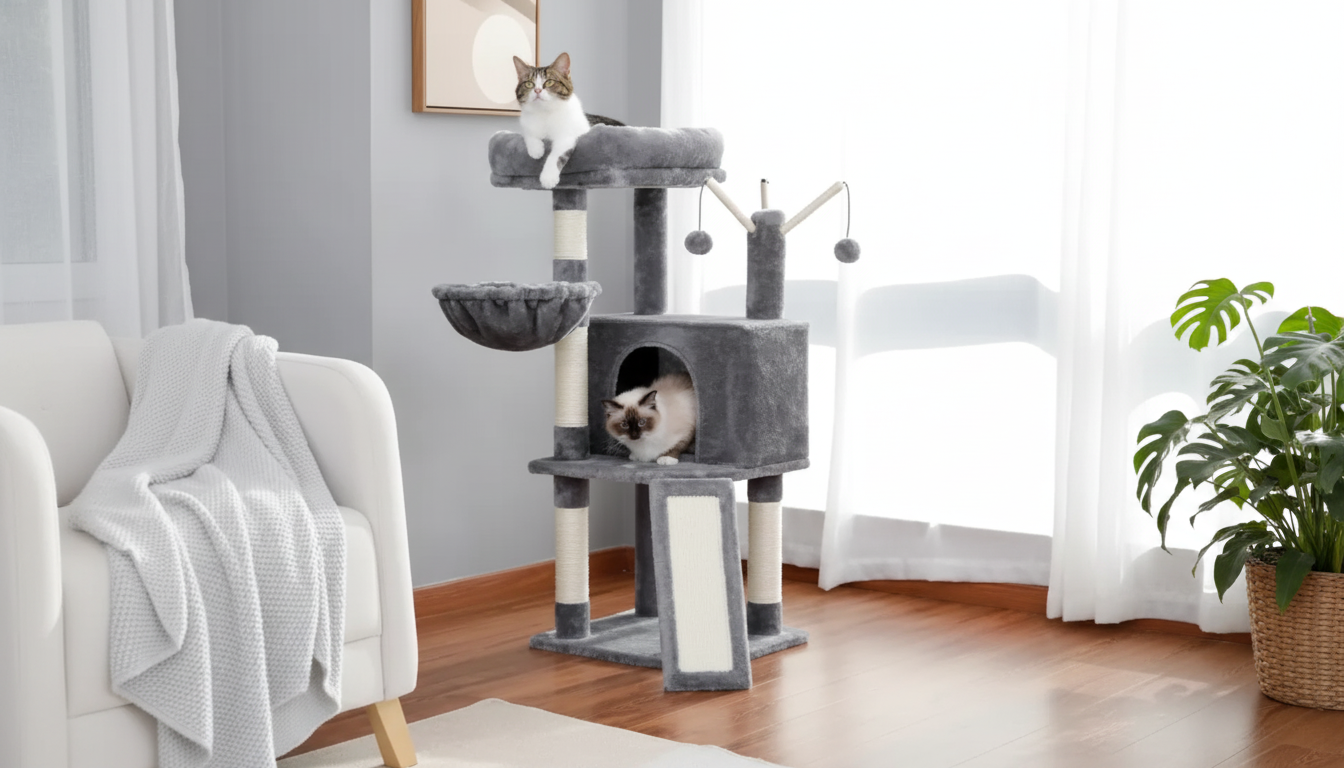
A well-designed cat tree can reduce furniture scratching, encourage healthy climbing, and create a reliable nap spot. A tower that combines a scratching post, a hammock, a roomy perch, and dangling play balls supports multiple daily needs—rest, play, stretching, and territory viewing—especially in indoor homes where vertical space matters.
What This Style of Cat Tower Helps With Day to Day
A multi-feature cat tower is more than “cat furniture.” It’s a practical way to give indoor cats a predictable place to do the things they naturally want to do, without turning your couch into a scratching target.
- Provides a dedicated scratching surface to help protect sofas, rugs, and door frames while supporting normal claw care.
- Adds vertical territory for observation and security, which can be especially calming in multi-pet homes where cats like to monitor the room from above.
- Creates two rest options: a hammock for snug lounging and an elevated perch for surveying (or napping with a view).
- Encourages movement through climbing, turning, and stretching—simple, daily enrichment that matters for indoor cats.
- Offers quick-play stimulation with hanging balls that can redirect pouncing away from hands and ankles.
Scratching is a normal feline behavior, not a “bad habit.” The goal is to make the right surface easier and more rewarding than the wrong one. For more detail on why cats scratch and how to guide it, see the ASPCA’s overview on scratching.
Key Features to Look For in a Hammock + Perch + Hanging Balls Build
Not all towers are built the same. When a cat launches upward, swats toys, or flops into a hammock, the tower needs to stay quiet, stable, and comfortable—otherwise many cats will avoid it.
Stability and build balance
- Stable base: a wider footprint and balanced weight reduce tipping when a cat jumps onto the perch.
- Solid joints: hardware that tightens securely helps prevent wobble that can spook cautious cats.
Scratch coverage that feels “worth it”
- Durable wrap: posts wrapped with tough sisal (or a similar scratching material) last longer and hold interest.
- Enough height for a full stretch: many cats prefer scratching surfaces that let them extend from shoulders to hips instead of crouching.
Comfortable hammock and a usable perch
- Hammock support: look for tight attachment points, reinforced fabric, and a shape that cradles without sagging excessively.
- Perch size: a platform that fits a curled adult cat; raised edges often improve confidence and comfort for perch-sitters.
Play elements that are fun (not frustrating)
- Toy placement: hanging balls should be reachable without forcing awkward twisting or unsafe jumps.
- Replaceable elements: detachable toys or re-wrappable scratch areas can extend the tower’s lifespan and keep the setup feeling “new.”
Sizing and Placement Tips for Real Homes
The “best” tower is the one your cat actually uses. Placement and sizing can make the difference between a daily favorite and an expensive decoration.
- Measure vertical clearance: leave space above the top perch so cats can sit upright comfortably without bumping shelves or ledges.
- Match height to personality: confident climbers often prefer higher perches; timid cats may favor mid-height levels they can exit quickly.
- Consider a window nearby: natural light and outdoor views add enrichment, but keep the tower away from fragile blinds and dangling cords.
- Give it a “safe side”: placing one side against a wall can increase perceived security and reduce wobble.
- Avoid pinch points: skip narrow hallways or high-traffic choke points where people and pets repeatedly bump the tower.
- Use traction on smooth floors: a non-slip mat underneath reduces shifting during play and climbing.
Quick placement checklist
| Home situation |
Best placement approach |
Why it helps |
| Small apartment |
Corner near a window |
Maximizes vertical territory without blocking walkways |
| Multi-cat home |
Area with multiple escape routes |
Reduces resource guarding and surprise encounters |
| Kitten household |
Near main living area |
Encourages supervised play and safe climbing habits |
| Senior cat present |
Next to a sofa/low platform |
Creates an easy step-up path to the hammock/perch |
How to Choose the Right Cat Tree Tower (No Guesswork)
Choosing gets easier when you start with your cat’s primary “daily jobs”: scratching, sleeping, watching, or zooming. A tower with a hammock, perch, scratch post, and hanging balls can cover all four—but the best balance depends on your household.
Environmental setup matters as much as the object itself. If you’re building a more cat-friendly indoor space overall, the AAFP environmental needs guidelines and International Cat Care’s enrichment advice are excellent references for vertical space, safe resting areas, and play variety.
Helping Cats Use It Quickly (Especially If They Ignore New Items)
Safety, Durability, and Maintenance
FAQ
Will a hammock and perch work for larger cats?
Yes, as long as the perch is wide enough for a full curl or side-sleep and the hammock has strong attachment points that stay taut. Also confirm the base and main post feel stable so the tower doesn’t wobble when a larger cat jumps up.
How can scratching posts reduce furniture scratching?
Place the tower near the current scratching “hot spot,” reward your cat for using the post, and make the post more appealing through height, texture, and location. Consistent redirection works best when the preferred surface is more convenient than the furniture.
Where should a cat tree be placed for the most use?
Near a window or in the main living space where your cat already spends time, ideally with one side near a wall for extra security. Avoid tight hallways and spots where people or pets frequently bump the tower.
Recommended for you




Leave a comment