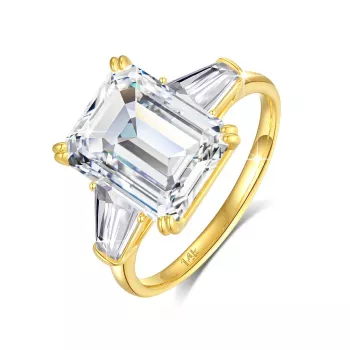
An emerald cut center stone paired with warm 14K gold creates a look that feels both architectural and timeless. This 4ct moissanite ring is designed for women who want crisp step-cut lines, a bold presence on the hand, and a band that works as an engagement ring or a statement wedding piece. The long facets of an emerald cut emphasize clarity and symmetry, while moissanite delivers bright sparkle with impressive durability for daily wear. Use the guide below to understand materials, fit, styling, and what to check before choosing a ring like this.
Emerald cuts stand apart because their beauty comes from structure. Instead of the scattered glitter you see in many brilliant cuts, emerald cuts use long, rectangular facets that create clean, “hall-of-mirrors” flashes as the ring moves.
With a larger center stone and a shape that emphasizes precision, small design choices matter. Focus on comfort, security, and how the ring behaves in real life (not just in a jewelry box).
| Feature | What to Look For | Why It Matters |
|---|---|---|
| Center stone | Moissanite, 4ct look | High impact and strong sparkle without the maintenance expectations of softer gems |
| Cut/shape | Emerald cut (step cut) | Clean, elegant flashes; emphasizes symmetry and a refined silhouette |
| Metal | 14K gold | Good balance of durability and precious-metal feel for daily wear |
| Ring role | Engagement or wedding statement band | Easy to style solo or pair with a simpler stacking band |
| Comfort | Smooth interior and wearable height | Better day-to-day comfort and fewer snags on clothing |
Moissanite is popular for statement rings because it stays visually bright while standing up well to regular use. That said, emerald cuts have a specific optical personality—less “confetti sparkle,” more sleek glow.
For general cut concepts that influence appearance, the Gemological Institute of America’s overview is a useful reference: GIA: 4Cs of Diamond Quality (cut concepts and appearance).
A 4ct-look emerald cut ring benefits from a metal that feels luxurious but stays practical over time. 14K gold is a classic choice because its alloy blend improves hardness compared with higher-karat options.
Comfort is a make-or-break detail for an engagement ring, especially with a larger center stone. A great fit feels secure without feeling restrictive, even when hands swell slightly during the day.
If you like comparing durability across jewelry materials, the GIA’s reference on scratch resistance provides helpful context: Gemological Institute of America: Mohs Hardness Scale.
For straightforward guidance on jewelry marketing terms and disclosures, the Federal Trade Commission’s resource is a helpful baseline: FTC Jewelry Guides.
Emerald cuts are step cuts, so the sparkle shows up as broader, mirror-like flashes instead of the scattered glitter seen in brilliant cuts. The effect is different, not necessarily weaker—more sleek and glassy than twinkly.
Yes—14K gold is commonly used for everyday rings because its alloy blend adds strength compared with higher-karat gold. The key is a secure setting and periodic prong checks, especially with a larger center stone.
It should feel snug enough that it doesn’t spin constantly, but not tight or pinching when your hands warm up. If the band is wider or the setting sits taller, sizing up slightly (when between sizes) can improve comfort, especially if you plan to stack a wedding band.



Leave a comment