3500W Electric Jack Hammer Guide (1900 BPM + 2 Chisels)
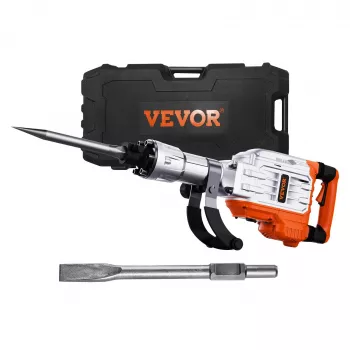
3500W Electric Demolition Jack Hammer (1900 BPM) Concrete Breaker with 2 Chisels: Practical Buying Guide
A high-watt demolition hammer can turn a weekend concrete job into a manageable task—if the power, impact rate, chisels, and handling match the material being broken. This guide breaks down what to look for, how to use it safely, and where a 3500W, 1900 BPM electric concrete breaker fits for common demolition work.
What This Demolition Hammer Is Built For
This style of electric demolition jack hammer is designed for breaking and chipping hard, brittle materials where repeated impacts do the work for you. It’s a practical choice when you want the simplicity of plugging in rather than managing a compressor, air lines, and fittings.
- Best for breaking concrete slabs, removing tile and mortar beds, chipping masonry, and light-to-medium demolition tasks where an electric tool is preferred over pneumatic options.
- 1900 BPM (blows per minute) favors steady material removal for concrete and masonry; slower, heavier blows typically feel more controllable than very high BPM tools on thick slab work.
- 3500W-class power is suited for longer sessions, but it needs a stable power source and properly sized extension cords to reduce voltage drop.
- Included chisels let you start immediately: a pointed chisel for cracking and a flat chisel for lifting/chipping layers.
If the job is a patio section, a walkway, an old mortar bed, or block-and-mortar cleanup, a high-power electric breaker can remove material efficiently while keeping setup straightforward.
Key Specs That Matter on the Job
When comparing demolition hammers, the “headline” numbers only help if they match how you’ll actually work: breaking thick slab is different from peeling tile, and overhead chipping is different from working flat on the ground.
- Power (W): Higher wattage generally indicates more motor capacity. It can help the tool maintain performance under load and reduce stalling when the bit binds.
- Impact rate (BPM): A steady BPM supports continuous chipping and surface removal. For many users, moderate BPM can feel smoother and easier to control than ultra-high BPM tools that “skitter” on hard concrete.
- Tool weight and balance: Heavier tools can do more work per blow, but they’re harder to maneuver on vertical surfaces or for prolonged sessions. Consider where your hands and shoulders will be after 30 minutes.
- Chisel type and shank compatibility: Confirm the included chisels fit the tool’s chuck system and that replacements are easy to source for future projects.
- Heat management: Extended chiseling creates heat in both the tool and the bit. Planned breaks and basic maintenance reduce premature wear.
| Item | Value |
|---|---|
| Model | Electric demolition jack hammer / concrete breaker |
| Rated Power | 3500W |
| Impact Rate | 1900 BPM |
| Included Chisels | 2 (pointed and flat) |
| Availability | In stock |
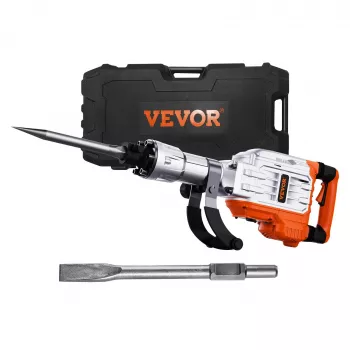
For a ready-to-go option with these core specs, see the 3500W Electric Demolition Jack Hammer – 1900 BPM Concrete Breaker with 2 Chisels.
Chisel Choices and When to Use Each
The included pointed and flat chisels cover the two most common demolition “moves”: initiating fractures and then separating material in sections.
Real-World Use Cases: Matching Tool to Material
For silica dust controls and safe work practices, consult OSHA’s guidance on respirable crystalline silica: https://www.osha.gov/silica-crystalline/construction. For additional background on silicosis prevention, NIOSH resources are also helpful: https://www.cdc.gov/niosh/docs/92-102/default.html.
Handling, Setup, and Safety Practices
- Electrical safety: Use a GFCI outlet (or an inline GFCI), especially in garages, basements, outdoors, or anywhere moisture might be present. Keep cords routed well away from the chisel path.
- Extension cords: Choose a heavy-gauge, outdoor-rated cord, and keep the run as short as practical to reduce voltage drop and heat buildup. If the cord or plug feels hot, stop and correct the setup.
- PPE essentials: Wear eye protection, hearing protection, gloves (vibration-damping helps), steel-toe boots, and a respirator rated for fine particulates when working with concrete and mortar. For hearing safety basics, see CDC/NIOSH noise guidance: https://www.cdc.gov/niosh/topics/noise/.
- Work posture: Stand with staggered feet, hold the tool with both hands, and avoid locking your elbows. This reduces fatigue and lowers how much vibration transfers into your arms and shoulders.
- Dust control: Wet methods can reduce airborne dust, but only use moisture when the environment and electrical setup are safe, and never create slip hazards around rubble.
Maintenance and Storage for Longer Service Life
When an Electric Breaker Makes More Sense Than Pneumatic
Shop In-Stock Picks
- 3500W Electric Demolition Jack Hammer – 1900 BPM Concrete Breaker with 2 Chisels
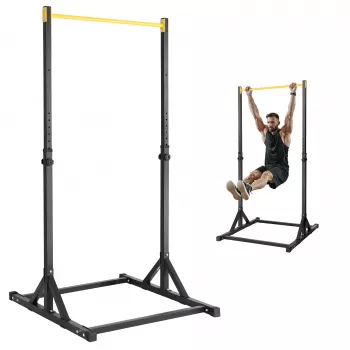
- Power Tower Dip Station Pull Up Bar Stand
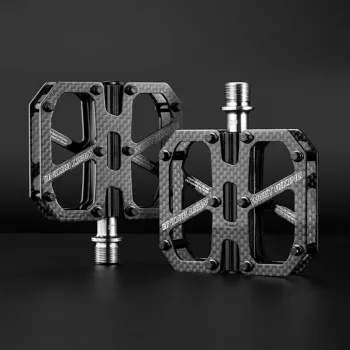
- Ultralight Carbon Fiber Bike Pedals with Titanium Axle
FAQ
Is 1900 BPM enough to break a concrete slab?
Yes for many residential slabs, but BPM is only one part of the equation—slab thickness, concrete strength, and chisel choice matter just as much. A 1900 BPM breaker with high power is typically used by starting fractures with a pointed chisel and then working in sections.
Which chisel should be used first: pointed or flat?
Start with the pointed chisel to initiate cracks and concentrate force, then switch to the flat chisel to lift, peel, and widen breaks. For surface removal like tile/mortar beds, keep the flat chisel at a shallow angle for better control.
What extension cord should be used for a high-watt demolition hammer?
Use a heavy-gauge, outdoor-rated extension cord, keep the run as short as possible, and avoid setups where the cord or plug heats up. Check the tool’s current draw, and use GFCI protection—especially outdoors or in damp areas.









Leave a comment