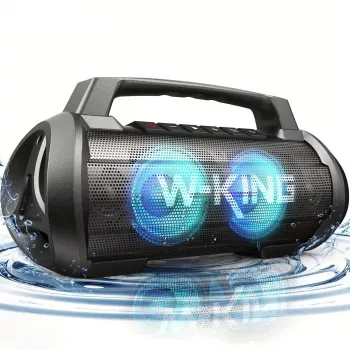
A 70W RMS portable speaker is built for listeners who want room-filling volume, satisfying low-end punch, and the freedom to play wirelessly at home, in the backyard, or wherever the day goes. The key is understanding what that power rating means in real use, then matching it with practical features like battery life, controls, and Bluetooth stability.
Speaker specs can be confusing, but RMS power is one of the more useful numbers. RMS (root mean square) is commonly used to describe continuous output, which tends to be more meaningful than “peak” wattage when comparing portable speakers. A 70W RMS portable speaker is generally a strong fit for larger rooms, open-plan living spaces, patio listening, and small gatherings where you want clean volume without pushing the speaker into harshness.
That said, perceived loudness isn’t determined by wattage alone. Speaker efficiency, driver size, tuning, and where you place it matter just as much. Outdoors, where sound disperses quickly and ambient noise competes (neighbors, traffic, wind), higher continuous power often translates into better headroom and a fuller presence at the same listening distance.
| Scenario | What to prioritize | Why it matters |
|---|---|---|
| Bedroom/desk listening | Balanced tuning, low-noise at low volume | Clarity and comfort matter more than maximum volume |
| Living room or open-plan space | Stronger continuous power, wider coverage | Fills space without pushing the speaker to distortion |
| Backyard/patio | Higher output, stable Bluetooth range | Outdoor sound dissipates quickly and needs more headroom |
| Small party or gathering | Punchy bass, louder clean output, easy controls | Maintains energy without harshness at higher volume |
Power is only part of the experience. A portable speaker earns its keep when it’s easy to live with day after day.
Bluetooth is convenient, but it’s also a radio connection—so the environment matters. Newer Bluetooth versions can improve power efficiency and connection behavior, but stability still depends heavily on the source device (phone/tablet/laptop) and what’s between you and the speaker.
For reference on how Bluetooth standards evolve over time, the Bluetooth Core Specification (Bluetooth SIG) is a helpful authoritative source.
Great sound is usually the result of small, smart choices rather than extreme EQ or max-volume listening.
For general consumer guidance on electronics compliance and authorized equipment records, the FCC Equipment Authorization database is a useful official resource.
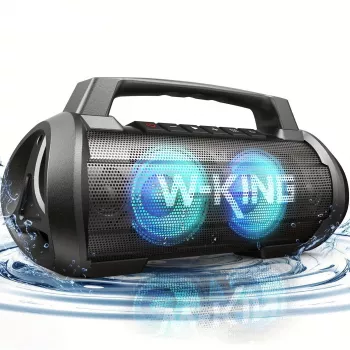
If you want a noticeable step up from mini speakers without moving to a full home stereo system, the 70W RMS Bluetooth Portable Speaker is designed for louder, fuller playback and flexible indoor/outdoor use. It’s well-suited to everyday listening and casual gatherings where clean volume matters.
| Item | Detail |
|---|---|
| Product name | 70W RMS Bluetooth Portable Speaker |
| Power (continuous) | 70W RMS |
| Availability | In stock |
| Price | $128.47 |
In many patio or backyard setups, 70W RMS provides strong headroom for a small gathering, especially when the speaker is elevated and aimed toward the group. Outdoor dispersion, placement, and music style still affect how “big” it sounds, so keeping the phone nearby can also help maintain a stable connection.
RMS watts typically represent a speaker’s continuous, sustained output, while peak watts describe short bursts that may not reflect everyday performance. When comparing options, RMS plus real-world behavior at higher volume is usually more informative than peak numbers alone.
Keep the source device within line of sight when possible, reduce interference from nearby Wi‑Fi or other wireless devices, and avoid placing the speaker behind metal objects or inside cabinets. If problems persist, updating your phone and re-pairing the speaker can often improve stability.


Leave a comment