-
Shop
- Adidas
- AI Career Advantage Collection
- AI Skills for Creators & Freelancers
- AI Client Management
- AI Ethics
- AI Mindset
- AI Tools & Prompts
- AI Writing & Content Creation
- Audio, Voice & Music
- Design & Visual Creation
- Email, Messaging & Communication
- Freelancing & Business
- Marketing, Ads & Conversion
- Productivity, Workflow & Automation
- SEO & Search Optimization
- Social Media Content & Growth
- Strategy, Planning & Analytics
- Video Creation & Editing
- AI Skills Mastery 2026 Collection
- Apple Accessories
- Best-Sellers
- Business & Digital Skills
- Car Accessories
- Confidence
- Dating & Social Skills
- Digital Resources
- AI & Technology
- Beauty
- Budgeting & Saving
- Car Buying & Ownership
- Entrepreneurship & Business Growth
- Financial Education
- Financial Independence
- Financial Mindset & Psychology
- Goal Setting
- Hobbies
- Home Styling & Organization
- Kitchen & Recipes
- Leadership
- Mindfulness
- Online Business
- Parenting & Child Development
- Personal Style & Fashion
- Pet Lifestyle & Wellness
- Positive Thinking
- Sleep Improvement
- Smart Life with AI
- Stress Management & Relaxation
- Wellness
- Yoga & Mind-Body Practices
- Education & Learning
- Family & Home
- Family & Parenting
- Fashion
- Fashion & Beauty
- Fashion Accessories
- Furniture
- Gadgets
- Health & Beauty
- Health & Wellness
- Home & Garden
- Home Supplies
- Jewelry
- Kids & Babies
- Nike
- Personal Growth
- Personal Growth & Wellness
- Pet Care
- Pet Supplies
- Pets
- Sport & Outdoors
- Super Deals
- Travel
- Travel & Adventure
- Wealth
- Wealth Building
Cactus Cat Tree Tower Guide: Stable, Tall, Cat-Ready
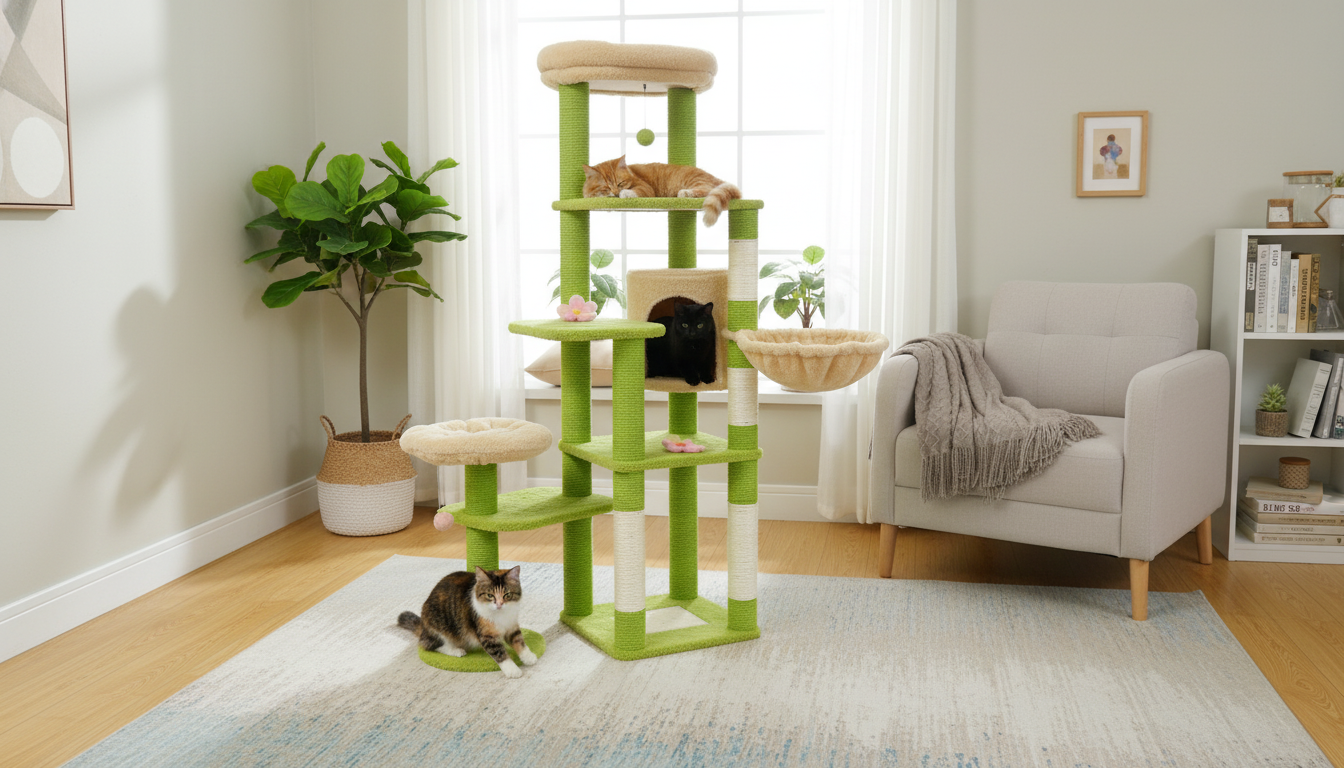
A large cactus cat tree tower turns a single vertical footprint into a climb zone, scratch station, and nap stack—all wrapped in a playful desert-inspired silhouette. For energetic cats, it offers daily movement and vantage points. For space-conscious homes, it concentrates enrichment upward instead of outward. The details that matter most are the unglamorous ones: stability, durable scratch surfaces, comfortable perches, and a layout that matches how your cat actually moves.
What a cactus-style tower adds to a cat’s daily routine
Cats naturally seek height, texture, and predictable rest spots. A cactus-shaped tower packages those needs into one structure that can become part of a reliable daily rhythm.
- Vertical territory: Climbing and perching support observation and a sense of control, especially in busy households.
- Built-in scratching: Dedicated scratch zones can redirect clawing away from rugs, sofas, and door frames.
- Multiple rest options: Several platforms can reduce competition in multi-cat homes when the routes and spacing are cat-friendly.
- A decor-friendly silhouette: The cactus look can read more intentional than a standard carpeted tower while still clearly functioning as cat furniture.
Key features to look for before buying
“Tall” and “cute” are easy to spot. The best towers earn their keep by staying steady, feeling safe underfoot, and holding up to daily scratching.
- Stable base: Look for a wide, heavier base that resists tipping during running jumps and fast climbs.
- Post thickness and height: Thicker posts tend to wobble less. The taller the structure, the more the post and base need to work together.
- Scratch surface coverage: Sisal-wrapped posts or durable scratch panels should sit along the main “climb path” where cats naturally reach and stretch.
- Bed and perch sizing: Platforms should fit your cat’s body length and preferred sleep style—tight curlers need a secure nook; sprawlers need real width.
- Safe, soft edges: Rounded corners and plush wrap reduce slips and help cautious cats commit to higher levels.
- Easy-clean fabrics: Removable cushions or wipeable surfaces simplify shedding, dander, and hairball cleanup.
Quick checklist for comparing cactus cat towers
| Feature | What to check | Why it matters |
|---|---|---|
| Base stability | Wide footprint, heavier base, anti-tip feel | Reduces wobble and prevents accidents |
| Scratch zones | Sisal coverage on main climb path | Encourages use and protects furniture |
| Platform spacing | Step-like distances a cat can hop between | Improves usability for kittens, seniors, and shy cats |
| Perch comfort | Plush wrap, lip/bolster, adequate width | Supports longer naps and lounging |
| Build quality | Tight joints, solid hardware, no sharp staples | Longer lifespan and safer play |
Sizing and layout: matching the tower to cats and rooms
A cactus tower can be “large” in height while still failing a cat if the landings are cramped or the hops are awkward. Think in terms of pathways: how your cat gets up, where they pause, and how they get down.
- For large cats: Prioritize wider platforms and stronger posts. If perches are too narrow, big cats may avoid the top entirely.
- For kittens: Choose progressive, short steps between levels. Towers that jump too quickly in height can discourage use.
- For seniors: Look for lower jumps, grippier surfaces, and at least one easy-access lounge spot that doesn’t require a full climb.
- For small rooms: Vertical designs provide enrichment with minimal floor sprawl. Place it where your cat naturally passes rather than in a “dead corner.”
- For multi-cat homes: Multiple resting levels help, but traffic flow matters too—consider a second scratch option elsewhere to prevent one tower from becoming a bottleneck.
How to Choose: a simple decision path for a cactus cat tree tower
- Start with the heaviest and most active cat: Pick a tower that feels steady under sudden jumps, not just gentle testing.
- Choose scratch-first when furniture is the priority: Favor designs with generous sisal coverage on the main uprights where your cat will naturally stretch.
- Choose rest-first when naps are the priority: Look for plush, supported perches with enough width (and ideally a small lip) for relaxed sleeping positions.
- Match climb difficulty to mobility: Tighter level spacing for kittens and seniors; taller leaps and higher perches for athletic adults that enjoy vertical challenges.
- Confirm assembly and maintenance needs: Clear hardware labeling and accessible bolts make it easier to keep the tower tight over time.
- Plan placement before buying: Measure the intended spot, then note nearby shelves or windowsills that could act as safe “step-off” routes for confident climbers.
Placement tips that increase use (and reduce chaos)
Materials, durability, and safety checks
For more general guidance on feline needs and behavior, see resources from International Cat Care and the ASPCA.
Helping cats take to a new tower quickly
If you’re working with a particularly anxious cat or introducing new furniture during a household change, the Humane Society’s cat care resources can be a helpful reference point for broader comfort and routine needs.
FAQ
Is a tall cat tower safe for large or energetic cats?
It can be safe when the base is wide and heavy, the posts are thick, and the hardware is solid and correctly assembled. For very active cats, placing the tower next to a wall and re-tightening bolts regularly helps reduce wobble.
How often should the scratching posts be replaced?
It depends on how intensely your cat scratches and what the post is made of. Replace or repair when sisal becomes smooth, frays heavily, loosens from the post, or any staples/fasteners start to show.
Where is the best place to put a cactus cat tree tower?
A spot near a window or close to a social area tends to get the most use, as long as it’s away from loud startle triggers. Keep a clear landing zone around the base, and in multi-cat homes, avoid placing it in a narrow choke point.
Recommended for you

Was this article helpful?
Yes
No








Leave a comment