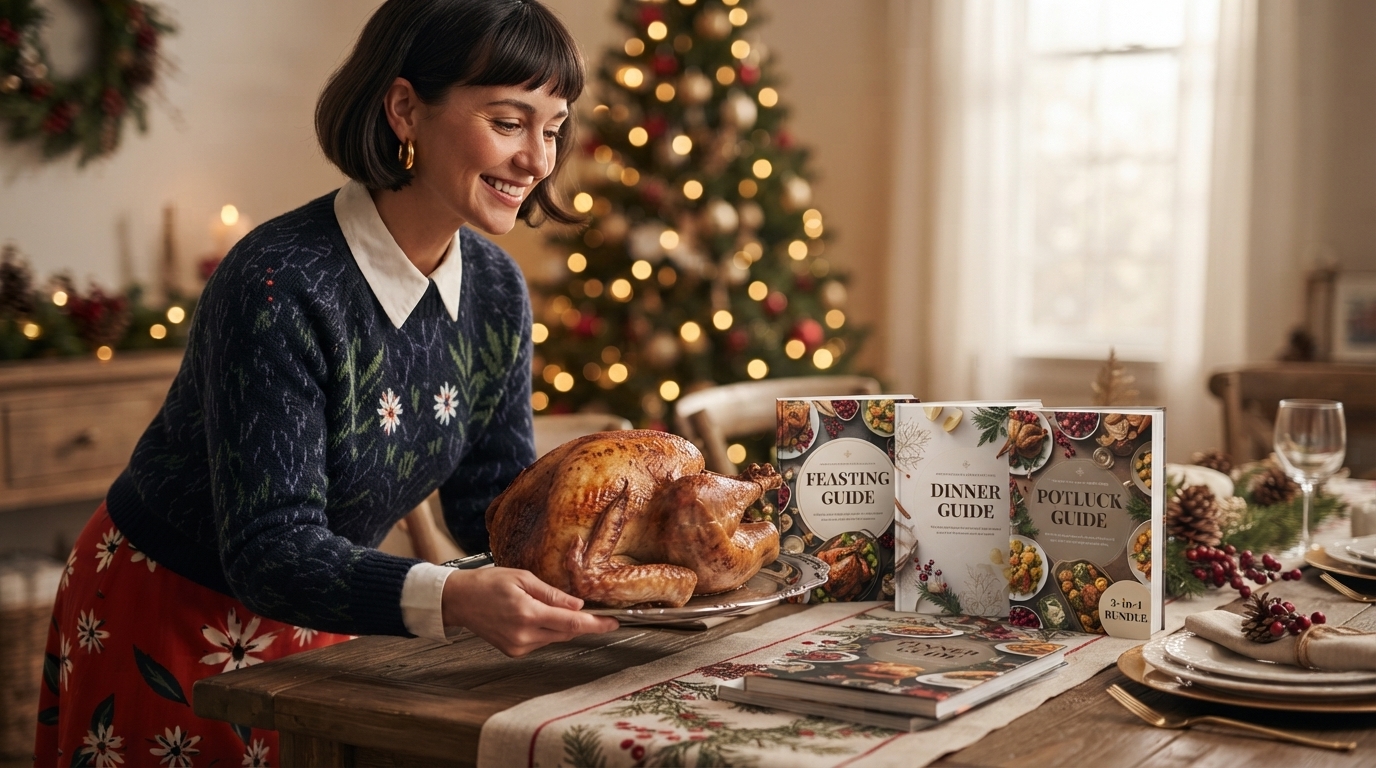
Holiday hosting runs smoother with a repeatable system: choose a balanced menu, map prep across a realistic timeline, and coordinate people and dishes before the week gets busy. With a clear planning flow, big feasts feel manageable, smaller dinners stay elegant (not exhausting), and potlucks come together without duplicate casseroles. Use the steps below to keep the food cohesive, the kitchen under control, and guests well-fed—without last-minute scrambling.
Before picking recipes, decide what kind of gathering you’re actually running. The format determines everything from oven scheduling to serving pieces.
Next, lock in the basics: guest count, serving style (plated vs. buffet), and timing window (exact dinner time vs. open house grazing). These decisions prevent the classic problem of food ready too early—or everything needing the oven at once.
A great holiday menu isn’t just tasty—it’s compatible. The best plans avoid “all hands on deck” cooking in the final 20 minutes.
If you like having a reusable framework you can adapt each season, the Holiday Menu System for Easy Planning: 3-in-1 Bundle – Feasting, Dinner, & Potluck Guides helps turn “ideas” into a structured menu plus schedule you can repeat for different gathering sizes.
The easiest way to avoid chaos is to schedule by prep type (chopping, baking, assembling, reheating) and batch actions wherever possible. Chop all onions/celery/herbs at once; wash greens together; label containers with the dish name and date.
Also create an oven plan: list every oven dish with its temperature, bake time, and whether it can rest or hold warm. Add a buffer window for surprises and keep a simple fallback ready (store-bought rolls, a salad kit, or a backup dessert).
| When | Do this | Examples |
|---|---|---|
| 7–10 days out | Confirm guest count and format | Diet notes, potluck sign-ups, serving style |
| 3–5 days out | Shop pantry + nonperishables, finalize prep list | Broth, spices, foil, parchment, storage containers |
| 1–2 days out | Prep and make-ahead items | Dressings, desserts, chopped aromatics, brines, casseroles assembled |
| Day of (morning) | Cook long items first | Roasts, braises, baked goods, soups |
| Day of (2–3 hours) | Roast/finish sides and reheat | Casseroles, roasted veg, gravy, warm dips |
| 30–45 minutes | Set up serving + temperature checks | Buffet layout, hot holding, garnish and plating |
For a buffet that feels special (and sturdy enough for seconds), consider setting the table with the 24-Piece Handpainted Blue Spiral Dinnerware Set—a coordinated place setting makes even a casual potluck look intentional.
The most reliable approach is a single master list that flows in one direction: menu → ingredients → prep tasks → day-of schedule. The Holiday Menu System for Easy Planning: 3-in-1 Bundle – Feasting, Dinner, & Potluck Guides is designed around that exact workflow.
Many components can be finished 1–2 days ahead, like dressings, desserts, chopped aromatics, brines, and casseroles assembled (but not baked). Save crisp items and most roasted vegetables for day-of so textures stay fresh, and schedule oven time by temperature so you can bake in efficient batches.
Use category sign-ups with quantity targets (for example, two vegetable sides and one dessert), then confirm what each person is bringing on a shared list. Collect details like hot/cold service, allergens, and needed utensils, and keep one easy backup item ready in case a category is missing.
Keep hot foods hot and cold foods cold by using small-batch rotation, insulated carriers, slow cookers or warming trays for hot dishes, and ice baths for cold salads and dairy-based items. A food thermometer helps confirm foods aren’t sitting too long in the temperature “danger zone.”





Leave a comment